
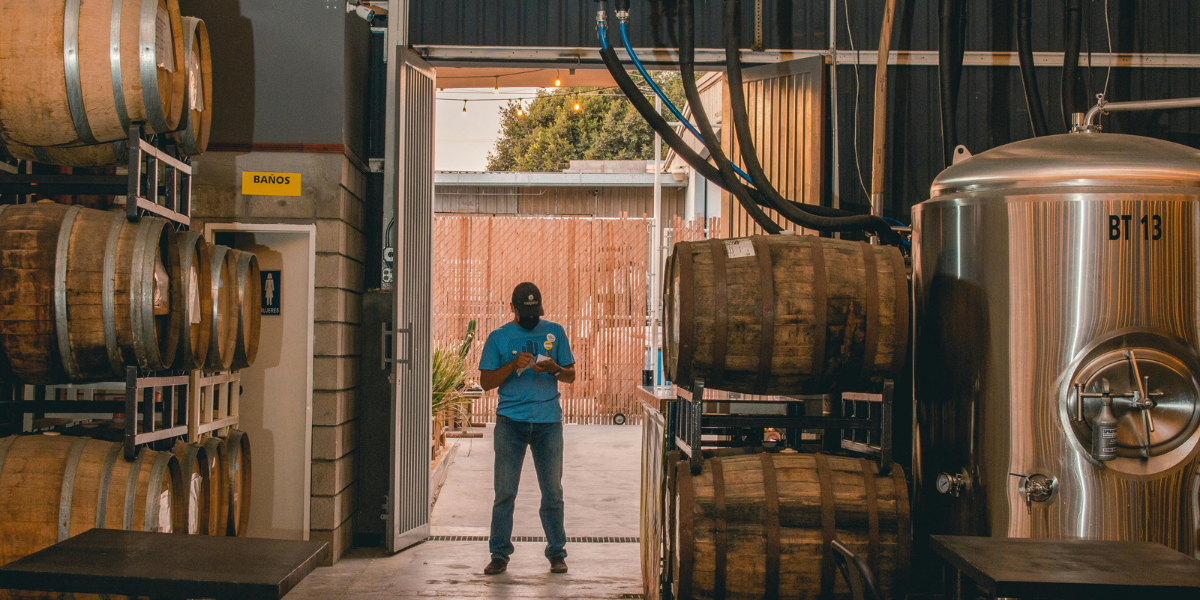
On your first day, you’ll roll a full keg across a wet cellar floor and learn something no job posting mentions. Brewery jobs are physical work. A full keg can weigh more than 160 pounds, according to the Brewers Association. That is a lot of weight to tip, lift and stack, sometimes dozens of times in a shift.
If you love beer, working where it’s made can sound like a dream. For many people it is. But it helps to know what the work actually involves before you sign up, and what to do if your body pays the price.
Brewery Jobs Are Bigger Than the Brewhouse
The craft beer world is a real employer. The Brewers Association reported 9,578 operating craft breweries in the US in 2025, with a craft brewing workforce of 191,000 jobs.
Not all of those jobs involve a mash paddle. Production work usually falls into a few areas:
- Brewhouse: milling grain, running the mash and boiling wort
- Cellar and fermentation: moving beer between tanks, monitoring fermentation and cleaning
- Packaging: canning, bottling and filling kegs
- Warehouse and shipping: moving pallets, often with a forklift
- Taproom: serving, washing glassware and keeping the floor safe for guests
Each area has its own risks. Most of them come down to heavy loads, hot liquids, chemicals and wet floors.
The Weight Adds Up Fast
A standard US half-barrel keg holds 15.5 gallons of beer. Full, it can top 160 pounds. Compare that with guidance cited by the Brewers Association: NIOSH recommends a limit of 51 pounds for single-person lifts under ideal conditions when the employee must lift repeatedly over an eight-hour shift.
That gap is why strains are so common. When NIOSH evaluated a large Colorado brewery, sprains and strains were the most common injuries in the plant’s logs. The shoulder was the body part involved most often.
A few habits help:
- Use a keg dolly or lift assist instead of muscling kegs by hand
- Ask for a second person on heavy or awkward lift
- Keep walkways clear so you are not carrying weight around obstacles
- Report early aches before they turn into a real injury
Hot Wort and Steam Don’t Forgive Mistakes
Brewing means boiling large volumes of liquid. The Brewers Association warns that wort burns are worse than hot-water burns. Wort is sticky, so it clings to skin and keeps transferring heat.
Boilovers, hose connections and hot equipment are the usual trouble spots. Long sleeves, proper gloves, face protection and a slow, deliberate pace around the kettle all reduce the risk.
Tanks, CO2 and Cleaning Chemicals
Every fermentation throws off carbon dioxide, and CO2 can build up in tanks and low, poorly ventilated spaces. A since-archived OSHA regional emphasis program for beverage makers noted that storage and fermentation tanks have been cited in the past as permit-required confined spaces. Nobody should climb into a tank without training, testing and a plan.
Cleaning is its own hazard. Breweries rely on caustic and acid solutions to clean tanks and lines, and those chemicals can injure skin and eyes. Goggles, gloves and good labeling matter every single time.
That same program listed at least seven general hazards shared by breweries, wineries, distilleries and soft drink makers:
- Powered industrial trucks, such as forklifts
- Ergonomic hazards from manual material handling
- Hazardous noise
- Hazardous energy (lockout/tagout)
- Process safety management
- Permit-required confined spaces
- Exposure to toxic chemicals
How Breweries Compare on Injuries
Brewery injury rates have generally moved in the right direction over the past decade. Still, the work is not risk-free. In 2024, breweries reported 2.5 recordable injuries and illnesses per 100 full-time workers, according to the Bureau of Labor Statistics. The rate for all private industry was 2.3.
In other words, brewing sits a little above average. It’s not a reason to avoid the job. It is a reason to take training seriously. The Brewers Association offers safety courses that cover forklifts, cellaring, cleaning, canning and keg handling, plus free resources on its safety hub.
Don’t Forget the Taproom
Front-of-house work has hazards too. Spilled beer turns tile into a skating rink, and broken glass is part of the job. The Brewers Association’s taproom safety tips focus on slips, trips and falls, cuts and burns, and handling broken glass. A wet-floor sign and a dustpan within reach go a long way.
If You Get Hurt on the Job
Even careful people get injured. A tweaked back from a keg, a chemical splash or a fall on a wet floor can keep you off your feet for weeks. Here are a few steps that usually make things easier:
- Get medical care first, and tell the provider the injury happened at work
- Tell your supervisor as soon as possible, and keep a note of when and how you did it
- Write down what happened while it’s fresh, including names of anyone who saw it
- Keep copies of medical paperwork and any time you missed
Workers’ compensation is handled by the states, so the rules depend on where you work. In Pennsylvania, for example, the state’s Department of Labor & Industry says most workers are covered, including seasonal and part-time employees. It also notes that employees should give notice within 21 days of an injury to receive benefits back to the date of injury, unless the employer already knew about it. Notice given more than 120 days after the injury may mean losing benefits, again unless the employer already knew. Timing can work differently for injuries that build up gradually.
Because those details vary, it’s worth learning how to start a workers comp claim in your state before you ever need to. Knowing the process ahead of time takes some of the stress out of a bad day at work.
Before You Clock In
Brewery jobs can be some of the most satisfying work around. You make something people enjoy, and you pick up a real skill. Go in with your eyes open. Respect the weight, the heat and the chemicals, use the equipment that’s there to help you, and speak up early when something hurts.
