
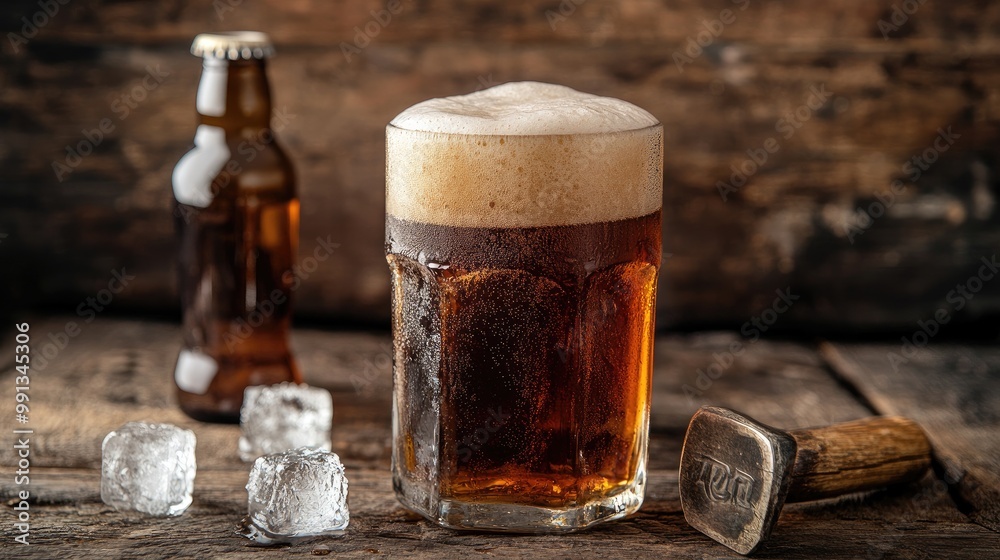
The cooler aisle looks different from what it did five years ago. Where craft IPAs and macro lagers once dominated, cans of hemp-derived THC seltzer now sit next to Bud Light and Sierra Nevada. For beer drinkers who are curious but cautious, the comparison comes down to specifics: calories, effects, legality, and whether the experience is worth swapping a familiar pint for a 12-ounce can of cannabis. Here is what matters in 2026.
Why Beer Drinkers Are Even Asking This Question
The shift is generational, but it is not abstract. Younger drinkers are pulling back from alcohol, and the numbers behind that shift are now hard to ignore. According to reporting in Time magazine, the share of U.S. adults under 35 who say they ever drink dropped from 72% in 2001-2003 to 62% in 2021-2023. NIAAA director George Koob has attributed part of the decline to a broader change in how younger drinkers perceive alcohol risk, with cannabis filling some of that vacated space.
Beer remains the most-consumed alcoholic beverage in the country, but the category is no longer the default social drink it once was. THC seltzer has stepped into that gap, and the question for many longtime beer drinkers is whether the swap actually delivers what they want.
What Is Actually in a THC Seltzer
THC seltzers are sparkling waters infused with a measured dose of tetrahydrocannabinol, usually between 2 mg and 10 mg per can. Most are hemp-derived, which is what makes them available outside of state-licensed dispensaries. A standard low-dose option like a Crescent 9 THC seltzer typically delivers around 5 mg of delta-9 THC per can, which is on the cautious end of the dosing range and a sensible starting point for anyone new to the format.
The category itself is no longer fringe. National brands have entered the space, distribution has expanded into bottle shops and grocery stores in several states, and product quality has improved meaningfully over the past two years. The base liquid is essentially flavored sparkling water, but the formulation has matured. Nanoemulsion technology now allows the THC to disperse evenly through the can, which is what lets the onset feel faster, and the dose feel more consistent than older edibles ever did.
Calories, Carbs, and the Bloat Factor
This is where THC seltzer has the most obvious edge over beer. The two drinks sit in completely different nutritional territory, and a side-by-side comparison makes the gap clear:
- 12oz craft beer: 150 to 250 calories on average, with IPAs and stouts often pushing past 300. Carbohydrates typically range from 12 to 25 grams per serving, along with residual sugars and starches from fermentation.
- 12oz THC seltzer: 5 to 50 calories per can. Zero or near-zero carbohydrates. No added sugar in most mainstream brands. A standard 5 mg dose adds nothing to the macro count beyond the cannabinoid itself.
- A four-can session: 600 to 1,200 calories from beer versus 20 to 200 from THC seltzer. Over a summer of weekly gatherings, the difference is measured in pounds.
That math is one of the reasons the category has grown so quickly. Grand View Research attributes much of the segment’s expansion in North America to health-conscious consumers moving toward low-calorie, non-alcoholic options, with the sub-2.5 mg subcategory projected to grow the fastest through 2033.
Beer’s caloric load is not just the alcohol. The carbohydrates left over from fermentation contribute as well, and as covered in this look at whether beer contains sugar, residual sugars and starches add up over a session. For beer drinkers tracking macros, a four-pack of THC seltzer over an evening looks very different on a food log than four IPAs.
The bloat factor is also real. Beer’s carbonation paired with its calorie density tends to produce that heavy, full feeling after a few rounds. Seltzers, THC or otherwise, sit lighter. That alone is enough reason for some drinkers to make the switch on long summer afternoons.
The Effects: Buzz, Hangover, and Next Day
The two drinks operate on different chemistry, and the experience reflects it. The timing curve looks more similar than most beer drinkers expect, but the peak and recovery diverge significantly:
- Onset: Beer takes hold within 10 to 30 minutes, depending on stomach contents. A modern THC seltzer using nanoemulsion technology hits in roughly the same window, much faster than the 60 to 90 minutes typical of older edibles.
- Peak: A few beers produce a warmth and loosening that most drinkers know by heart. A 5mg THC seltzer produces a milder, more cerebral relaxation that some describe as similar to two glasses of wine without the inebriation.
- Duration: Beer’s effects fade within two to three hours of the last drink. THC seltzer effects typically last two to four hours, depending on dose and tolerance.
- Next morning: Beer hangovers come from dehydration, congeners, and the body’s metabolic response to ethanol. THC does not produce the same effect, and drinkers who switch tend to report cleaner mornings.
Higher THC doses change the picture considerably, which is why most experienced consumers start at 2 to 5mg and wait an hour before deciding whether to have another. The next-day comparison is where THC seltzer makes its strongest case, particularly for drinkers who had been overshooting their beer tolerance.
That does not mean THC is risk-free. The compound has its own profile of cognitive and motor effects, and combining it with alcohol amplifies impairment in unpredictable ways. The two should not be mixed casually. The legal landscape around dosing is also worth understanding. Hemp-derived seltzers operate under the 2018 Farm Bill, which set a 0.3% delta-9 THC ceiling by dry weight – enough room in a 12 oz can for a meaningful psychoactive dose while remaining federally legal. Several states have since moved to restrict the category independently, so legality depends heavily on where a drink is sold.
Flavor and Food Pairing
Beer wins this one outright. Decades of brewing innovation mean almost any food has a beer that pairs naturally with it. Hops, malt, yeast, and barrel aging produce a depth of flavor that THC seltzer cannot match. The drink also carries cultural weight. A porter with a steak or a Belgian with mussels is a tradition built over generations.
THC seltzer flavors are improving fast, but they are still fundamentally flavored sparkling waters. Citrus, berry, and herbal profiles dominate. Some brands lean into bitter or hoppy notes to appeal to beer drinkers, but the product is rarely a meal centerpiece in the way a well-paired beer can be.
Beer also has documented nutritional and antioxidant content that THC seltzer does not. A look at beer’s health benefits covers the research on B vitamins, polyphenols, and the cardiovascular data tied to moderate consumption. Whether those benefits outweigh the calories and alcohol is a personal calculation, but they are real.
When to Reach for Which
The practical answer is that this is not actually an either-or for most beer drinkers. THC seltzer is best when the goal is a light, low-calorie social drink without next-day cost. It works well in scenarios where alcohol does not, like hot afternoons, long sessions, or moments when staying sharp matters more than the ritual of a pint.
Beer remains the better choice when flavor and food pairing matter, when the occasion is built around drinking, or when the social context calls for it. Sports bars, brewery tours, and slow dinners are still beer’s turf for a reason.
Many drinkers are settling into a pattern of using both. A seltzer on a Tuesday, a beer with Saturday’s burger. The point is not to replace one with the other but to add a tool that handles the situations beer was never optimized for.
The category has matured enough that beer drinkers can take it seriously without feeling like they are giving anything up. The calorie and recovery math favors THC seltzer. The flavor, tradition, and food pairing math favors beer. For 2026, the most useful framing is that these are now two drinks that can coexist in the same fridge, each doing what the other cannot.
